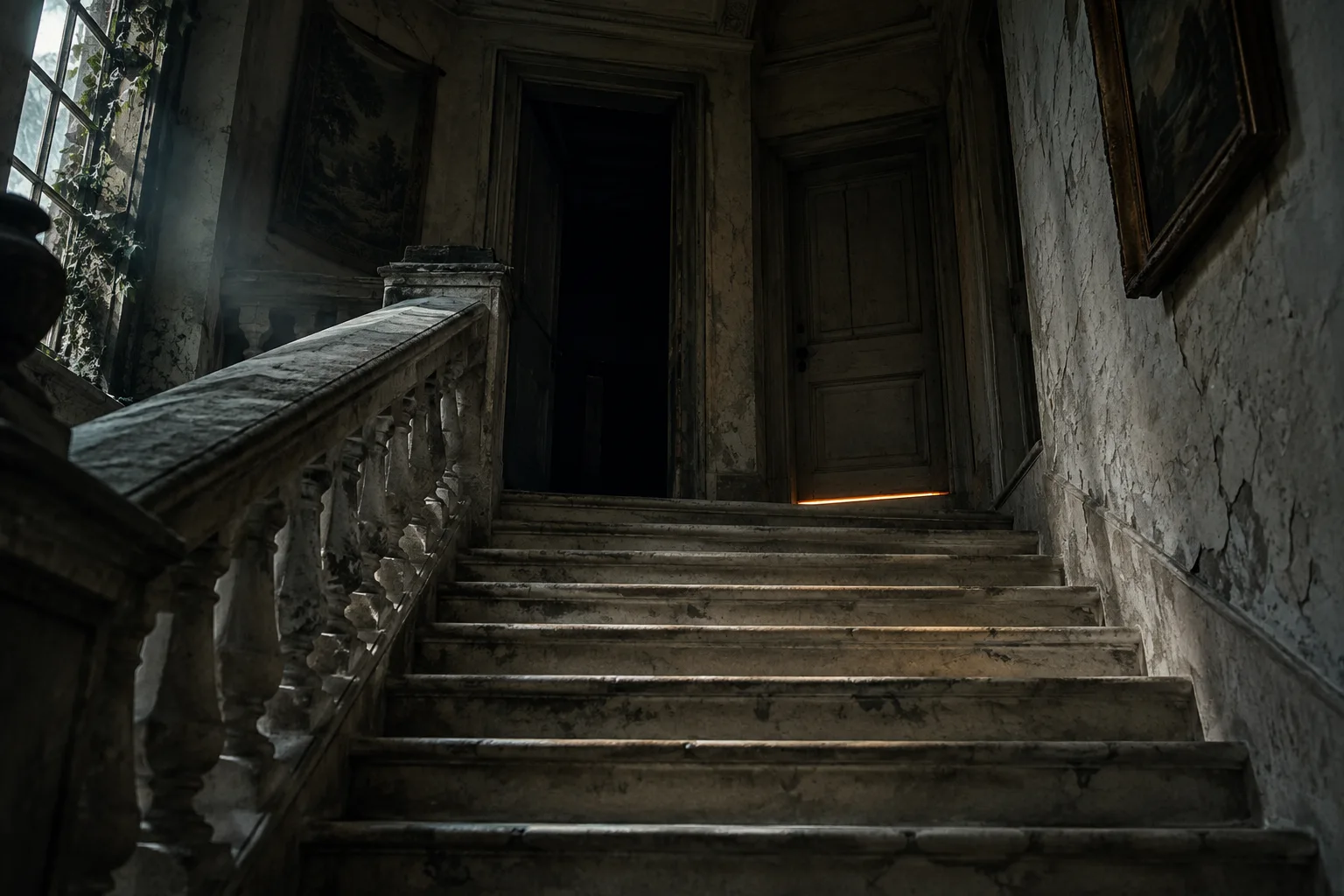
The account, told from the sources below. The evidence follows.
Poltergeists have a remarkably domestic range of interests. Furniture. Bedclothes. The occasional ornament. You never hear of one quietly fixing the boiler.
In late August 1977, Peggy Hodgson's children heard knocking in their north London home. Furniture moved. Peggy went next door for help, and soon the neighbours were standing in the house, listening too.
When the police arrived, they checked the walls, the attic and the pipes. The knocking came from one wall, then another. They found nothing that explained it.
One officer stayed in the living room while the others checked the kitchen. A boy pointed towards a chair beside the sofa. The policewoman watched it wobble, then slide across the floor towards the kitchen wall. Nobody was pushing it. She examined the chair and found no mechanism.
Investigators Maurice Grosse and Guy Lyon Playfair came to the house. Objects flew across rooms. Knocks interrupted the household. The children could be put to bed, but settling them there was another matter.
Janet Hodgson was lifted above her bed. Photographs caught her in the air. Outside the house, a passing witness saw her rise into view at the bedroom window, her body horizontal.
By December, something else was coming from Janet's room. At first there were whistles and sounds like barking. Then the noises formed a voice.
It was low, rough and masculine. The voice called itself Bill Wilkins. It said it had lived in the house, and described going blind, suffering a haemorrhage and dying in a chair downstairs.
The investigators put their questions to the child and listened to the old man's answers. They recorded the voice for hours. Grosse covered Janet's mouth. The voice continued, quieter now.
There were other people in the house to hear it. There were tapes to play back afterwards. When the recording ran, the same voice returned, with its own name and its own account of dying in a room the family still used.
The chair was downstairs. Janet was upstairs. Bill spoke as though he had never left.
What the record says
The family, the investigation, the photographs and the recordings are documented. A recording establishes that a sound was made. It does not establish that a dead man made it. The details in the story come from witness and investigator accounts, whose interpretations are disputed.
Janet and Margaret were caught playing tricks. Grosse and Playfair acknowledged this while maintaining that it explained only some incidents. Other investigators, including Anita Gregory, were unconvinced. A photograph of a child above a bed can show a jump; a deep voice can be produced by a living speaker. The mouth-covering demonstrations were not controlled proof of an external voice.
The voice's description was later said to match Bill Wilkins's death. That does not establish that the children could not have learnt the information. Neither the voice nor the photographs exclude ordinary explanations.
One last thing.
Then there is the policewoman's chair. In the statement reproduced in the SPR's account, Heeps described watching it travel roughly three or four feet and finding nothing to explain the movement. She was a responding officer, separate from the investigators who later championed the case.
An honest witness can still be mistaken, particularly in a darkened room. But catching Janet in a trick does not tell us exactly what Heeps saw that night. She had come to investigate a disturbance. What moved the chair in front of her?
Follow the evidence.
The sources behind this retelling, including accounts that disagree.
- Society for Psychical Research: Enfield case and investigation
- Joe Nickell: sceptical examination of Enfield (PDF)
- Enfield poltergeist: overview and further references
Original retelling prepared with AI assistance for ghoststories.boo. No dialogue has been invented. Historical accounts can contain errors; reported hauntings are not presented as proof of ghosts.
Audio uses a synthetic narrator. It is a reading of this script, not a recording of the alleged events.